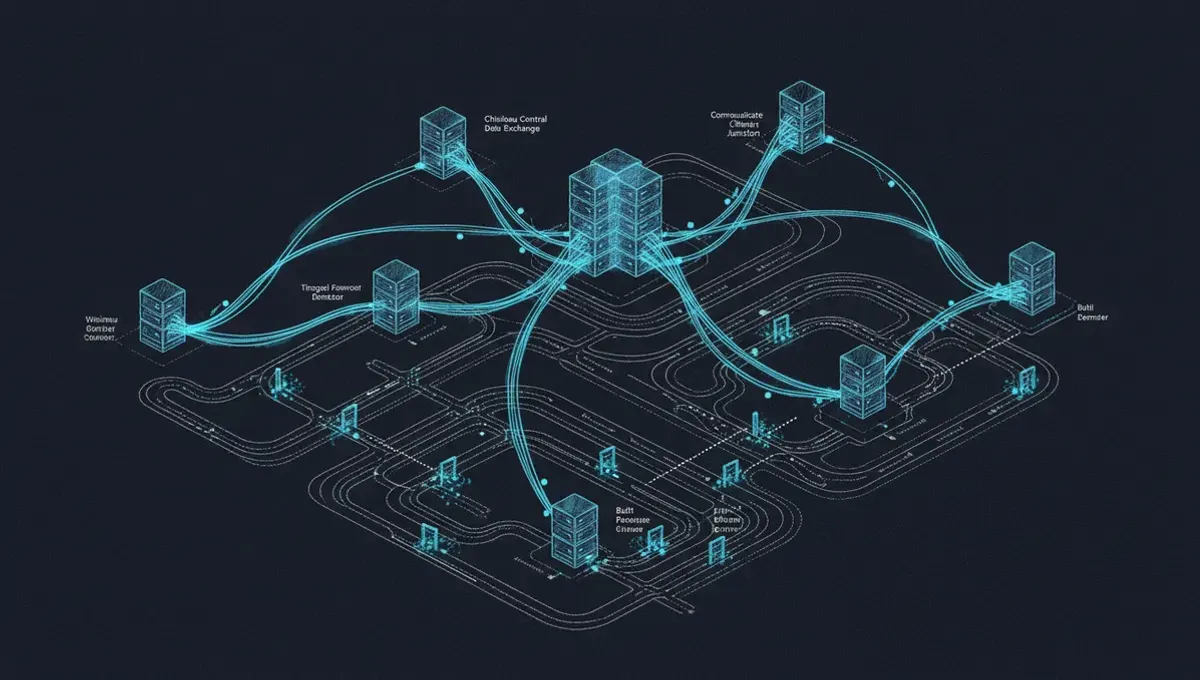
What Are Dark Markets and How Do They Operate
Dark markets are online marketplaces hosted on the Tor network and accessed through onion browsers. They operate similarly to conventional e-commerce platforms but with anonymity layers that obscure buyer, seller and platform operator identities. Transactions typically use cryptocurrency, most commonly Monero, to further distance financial trails from real-world identity.
These markets emerged after law enforcement shut down the original Silk Road in 2013. Subsequent platforms adopted stronger operational security, multi-signature escrow systems, and decentralized governance models to resist seizure. The typical marketplace offers vendor profiles, product listings, dispute resolution and a feedback system, all encrypted and accessible only through Tor.
Montenegro and other small European nations appear in darknet discussions primarily as transit points for physical goods and as locations where vendors or users may operate, rather than as hosts of major marketplace infrastructure. The actual servers and administrative control typically remain in jurisdictions with weaker law-enforcement cooperation or technical capacity to seize them.
Regional Darknet Activity Across the Balkans and Europe
The Balkans, including Montenegro, Albania, and neighboring countries, feature in darknet research as regions with mixed law-enforcement capacity and varying levels of cybercrime prosecution. Dark markets in Albania have been documented in law-enforcement reports as points of origin for certain vendor networks, while darknet activity in countries like Austria and Australia reflects the global nature of Tor-based commerce.
Small European nations such as Andorra and Liechtenstein, despite strong banking privacy traditions, do not host major darknet marketplaces. Instead, they appear in threat intelligence as locations where users access these platforms or where cryptocurrency exchanges operate with lighter regulation.
The real infrastructure concentration lies in jurisdictions with either strong technical anonymity protections (Iceland, certain Eastern European hosting providers) or weak legal frameworks for cooperation with Western law enforcement. Montenegro's role is peripheral: it may host users, transit points for physical smuggling, or money-laundering infrastructure, but not the marketplace platforms themselves.
How Law Enforcement Monitors Darknet Markets Across Borders
Law enforcement agencies in Montenegro and across Europe coordinate through Europol and bilateral agreements to identify and prosecute darknet market operators and major vendors. These efforts focus on financial tracking, server seizure, and undercover operations rather than attempting to shut down Tor itself.
The Tor Project documentation emphasizes that Tor is a legitimate privacy tool; law enforcement's challenge is distinguishing between lawful anonymity use and criminal activity. Agencies monitor darknet markets by:
- Analyzing cryptocurrency transactions and tracing them to exchanges where users convert to fiat currency
- Infiltrating marketplace forums and vendor networks through undercover agents
- Seizing servers and backup infrastructure when jurisdictional cooperation permits
- Prosecuting vendors and operators identified through operational security failures
Montenegro's law-enforcement agencies participate in these international efforts, though the country's smaller technical capacity means most investigation and prosecution happens through Europol coordination or with assistance from larger EU member states.
Why Darknet Markets Matter for Your Security Awareness
Understanding how dark markets operate protects you in several concrete ways. First, if your personal data appears in a breach, knowing how stolen credentials are bought and sold on these platforms helps you respond faster. Second, recognizing the infrastructure behind darknet markets helps you identify phishing attempts that impersonate legitimate marketplace addresses.
Third, awareness of regional darknet activity, whether in Montenegro, Austria, or Australia, informs your threat model if you operate a business or manage sensitive information. Ransomware gangs, for example, advertise stolen data on darknet markets before deploying extortion demands, giving organizations a window to detect breaches.
Finally, understanding that these markets are not invulnerable but subject to law-enforcement action, operational security failures, and exit scams helps you avoid the false sense of security that some users develop. Many people who lose money on darknet markets do so because they trusted a platform's reputation without understanding its actual security model or the legal risks they faced.
Common Misconceptions About Darknet Markets and Regional Activity
A widespread misconception is that darknet markets are uniformly secure and that using Tor alone guarantees anonymity. In reality, operational security failures by users, vendors, and platform operators have led to the identification and prosecution of thousands of people. The Tor Project's own documentation warns that Tor protects your connection, not your behavior; users who reuse usernames, upload unredacted documents, or conduct transactions carelessly can be deanonymized.
Another misconception is that small European nations like Montenegro, Andorra, or Luxembourg are hubs for darknet infrastructure. In practice, marketplace operators choose jurisdictions based on technical hosting capacity and legal risk, not geographic size. A nation's banking secrecy or privacy reputation does not determine whether it hosts darknet markets.
Third, many people assume that law enforcement cannot touch Tor-based platforms. In reality, the FBI, Europol, and national agencies have repeatedly seized major marketplaces by identifying and arresting operators, compromising server infrastructure, or exploiting operational security mistakes. The closure of markets like Wall Street Market and Nightmare demonstrates that no platform is permanently safe from law enforcement.
Reality Layer: How the Darknet Ecosystem Actually Behaves
According to Tor Project documentation, the network itself is resilient and decentralized, but individual marketplaces are not. Each marketplace is a single point of failure: if the operator is arrested or the server is seized, the entire platform disappears. This structural vulnerability explains why darknet markets have a typical lifespan of 2 to 5 years before closure, exit scam, or law-enforcement action.
Public law-enforcement press releases from Europol and the U.S. Department of Justice reveal that most marketplace seizures result from financial tracking, not Tor network compromise. Cryptocurrency analysis firms can trace transactions from exchanges to darknet wallets, and law enforcement uses this data to identify users and operators. This matters to you because it shows that anonymity on darknet markets is conditional and depends on the user's operational security, not the platform's technical design.
Academic research on onion services documents that many users of darknet markets are not sophisticated criminals but ordinary people seeking drugs, weapons, or stolen data out of curiosity or desperation. These users often lack the operational security discipline to remain anonymous, leading to arrest and prosecution. Understanding this reality helps you recognize that darknet market participation carries real legal consequences, regardless of geographic location or perceived anonymity.
Practical Steps to Protect Yourself from Darknet-Related Threats
Your security posture should account for darknet market activity without requiring you to access these platforms. Start by monitoring whether your personal information appears in breaches, using services that alert you when credentials or email addresses surface on darknet markets.
Implement these protections:
- Use a password manager to generate unique, strong passwords for each online account
- Enable two-factor authentication on email, banking, and cryptocurrency exchange accounts
- Monitor your credit reports regularly for unauthorized accounts or inquiries
- Use a reputable VPN when accessing public Wi-Fi, though understand that a VPN does not replace other security measures
- Verify the legitimacy of websites before entering credentials by checking SSL certificates and domain registration details
- Keep your operating system, browser, and security software updated
If you suspect your data has been compromised, change passwords immediately, contact your bank or relevant service provider, and consider placing a fraud alert with credit bureaus. Awareness of how darknet markets operate and how data flows through them is your first line of defense against becoming a victim of crimes that originate on these platforms.
Frequently asked
Is Montenegro a major darknet marketplace hub
No. Montenegro is not a significant host of darknet marketplace infrastructure. The country may have users and transit points for illegal goods, but major marketplace platforms operate from jurisdictions with different legal or technical characteristics. Law enforcement in Montenegro participates in international efforts to monitor and prosecute darknet activity through Europol coordination.
How do dark markets in the Balkans differ from other regions
Balkan nations like Montenegro and Albania feature in darknet research primarily as user locations and transit points rather than as infrastructure hubs. The actual marketplace servers and administrative control typically remain in jurisdictions chosen for technical hosting capacity and legal risk assessment, not geographic proximity to the Balkans.
Can law enforcement really shut down darknet markets
Yes. Law enforcement has repeatedly seized major darknet marketplaces by identifying and arresting operators, compromising servers, or exploiting operational security failures. The Tor network itself is resilient, but individual marketplaces are single points of failure. Most seizures result from financial tracking and cryptocurrency analysis rather than Tor network compromise.
What happens if my data appears on a darknet market
If your credentials or personal information surface on a darknet marketplace, change your passwords immediately, enable two-factor authentication, and monitor your credit reports. Contact your bank or relevant service provider and consider placing a fraud alert with credit bureaus. Darknet market monitoring services can alert you when your data appears in breaches.
Is using Tor enough to stay anonymous on darknet markets
No. Tor protects your connection, but operational security failures by users can lead to deanonymization. Reusing usernames, uploading unredacted documents, or conducting transactions carelessly can expose your identity. Law enforcement has successfully identified and prosecuted thousands of darknet market users despite their use of Tor.