Why Browser Choice Matters for Dark Web Access
Your browser is the software layer between you and the websites you visit. On the regular internet, your browser leaks your IP address, location, device fingerprint, and browsing history to every site you visit and every network you pass through. On the dark web, a weak browser can undo all the anonymity that Tor provides. The Tor network routes your traffic through multiple encrypted relays, but if your browser then reveals your real IP address through a plugin, a misconfigured setting, or a browser exploit, you are deanonymized instantly. This is why using a standard browser like Chrome or Firefox on top of a VPN is not sufficient for dark web access. You need a browser specifically hardened against these leaks, with plugins disabled and security settings locked down by default.
Tor Browser: The Standard for Dark Web Access
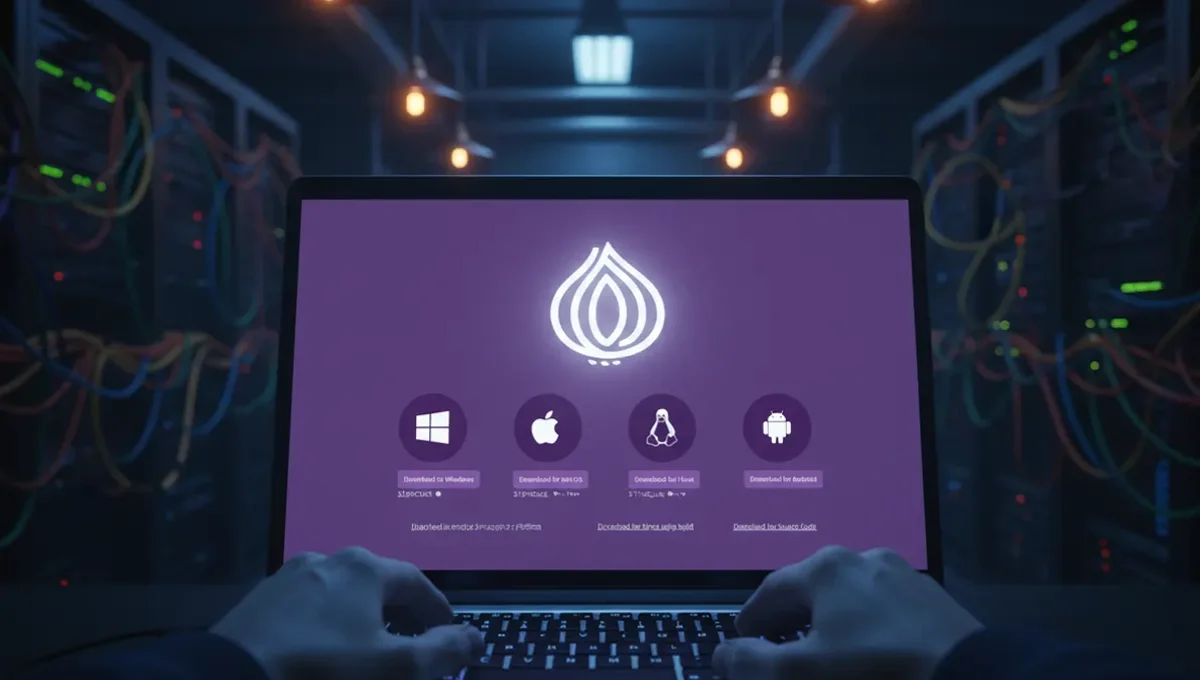
Tor Browser is the official browser maintained by the Tor Project. It is based on Firefox but stripped of plugins, with security settings maximized and automatic updates built in. When you open Tor Browser, it connects to the Tor network automatically and routes all traffic through three encrypted relays before reaching your destination. The browser also disables JavaScript by default in certain contexts, blocks WebRTC leaks, and resizes your window to prevent fingerprinting attacks. For most people seeking dark web access, Tor Browser is the right choice because it is free, well-audited, and updated regularly. The main trade-off is speed: your traffic passes through multiple relays, so pages load slower than on the clearnet. If you are accessing dark web content for research, journalism, activism, or privacy reasons, Tor Browser is the standard tool.
Operating Systems Designed for Dark Web Access
A browser alone does not guarantee anonymity if your operating system is leaking data. Tails and Whonix are Linux-based operating systems built specifically to route all traffic through Tor and leave no trace on your device. Tails is a live operating system that runs from a USB stick or DVD, leaving no permanent footprint on your computer. Every time you restart, all data is erased. Whonix runs as a virtual machine with a built-in gateway that forces all traffic through Tor at the system level. Both systems are more secure than running Tor Browser on Windows or macOS, but they require more technical setup and are slower. Use these systems if you are handling sensitive information, conducting security research, or believe you face a serious threat. For casual dark web browsing, Tor Browser on your regular operating system is usually sufficient.
Dark Web Access Apps and Limitations
Beyond desktop browsers, mobile apps like Onion Browser and Orbot provide dark web access on Android and iOS. Onion Browser on iOS routes traffic through Tor but has limitations because Apple restricts how third-party browsers can function. Orbot on Android is more flexible and can route traffic from other apps through Tor. However, mobile devices are inherently less private than desktop systems because they contain persistent identifiers, location data, and are more likely to be compromised by malware. If you must access the dark web from a phone, use Orbot with a dedicated device that you do not use for regular activities. Better practice is to use a desktop system with Tor Browser or Tails when handling sensitive dark web content. Mobile access should be treated as a convenience option, not a security solution.
VPN Plus Tor: Why This Combination Is Misunderstood
Many people believe that combining a VPN with Tor provides extra anonymity. In reality, this setup creates trade-offs that often reduce your privacy. If you use a VPN before Tor, the VPN provider sees that you are connecting to Tor, which is a red flag. If you use Tor before a VPN, the VPN provider sees all your Tor exit traffic, which can be logged and correlated with your real IP if the VPN is compromised. The Tor Project recommends using Tor alone rather than Tor plus VPN for most users. The only exception is if your ISP or network administrator blocks Tor, in which case a VPN can help you reach the Tor network. After that, disconnect the VPN and let Tor handle the anonymity. Using a VPN for dark web access app scenarios is rarely the right approach.
Reality Check: What Browsers Cannot Protect You From
Tor Browser and other dark web access tools protect you from network-level surveillance and IP leaks, but they do not protect you from user error, malware, or law enforcement. If you visit a phishing clone of a dark web marketplace and enter your username and password, the browser cannot stop you. If you download a file that contains malware, the browser cannot prevent infection. If you reveal personal information in a forum post or marketplace message, that information is permanent and can be traced back to you. According to Tor Project documentation, the browser is designed to prevent traffic analysis and IP identification, not to make you invisible if you behave carelessly. Law enforcement has successfully identified Tor users by exploiting browser vulnerabilities, analyzing metadata, and conducting traditional investigation. Your browser is one layer of protection, not a complete shield.
Choosing the Right Tool for Your Threat Model
The best browser to access the dark web depends on why you are accessing it and what threats you face. Start by defining your threat model: who might want to identify you, and what are the consequences if they do. If you are a journalist, activist, or whistleblower in a hostile country, use Tails or Whonix on a dedicated device with Tor Browser. If you are researching dark web marketplaces or security vulnerabilities, Tor Browser on a regular operating system is usually sufficient. If you are simply curious about onion sites, Tor Browser is the right starting point. Never use a standard browser with a VPN as a substitute for Tor. Keep your operating system and all software updated. Disable plugins and extensions. Use a strong, unique password manager. Treat the dark web like a hostile environment where mistakes are permanent. Your browser choice is important, but your behavior matters more.
Frequently asked
Is Tor Browser enough to access the dark web safely
Tor Browser is the standard tool and provides strong protection against IP leaks and traffic analysis, but it is not a complete security solution. Your behavior, the sites you visit, and the information you share matter just as much. Tor Browser protects your network privacy, not your identity if you reveal personal information. For higher-risk scenarios, combine Tor Browser with Tails or Whonix.
Can I use a VPN instead of Tor to access the dark web
A VPN alone cannot access the dark web because it does not route traffic to onion addresses. You need Tor to reach dark web sites. A VPN before Tor can actually reduce your privacy because the VPN provider sees you connecting to Tor. Use Tor alone unless your ISP blocks it, in which case use a VPN only to reach the Tor network, then disconnect it.
What is the difference between Tor Browser and Tails for dark web access
Tor Browser is a browser that routes traffic through Tor but runs on your regular operating system, which may leak data. Tails is a complete operating system that forces all traffic through Tor and leaves no permanent trace. Tails is more secure but slower and requires more technical setup. Use Tor Browser for casual access and Tails for sensitive or high-risk scenarios.
Can I access the dark web on my phone
Yes, using apps like Onion Browser on iOS or Orbot on Android, but mobile devices are less secure than desktops because they contain persistent identifiers and location data. Mobile access should be treated as a convenience option, not a security solution. For sensitive dark web activities, use a desktop system with Tor Browser or Tails.
Does Tor Browser hide my identity completely
Tor Browser hides your IP address and prevents traffic analysis, but it does not hide your identity if you reveal personal information or if you are tracked through user behavior. Law enforcement has identified Tor users through browser exploits, metadata analysis, and traditional investigation. Treat Tor Browser as one layer of protection, not a complete invisibility cloak.